
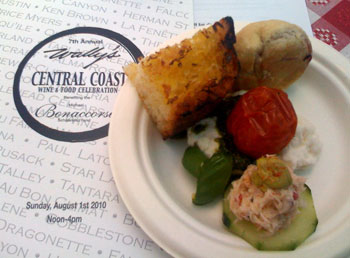
 As a wine lover in Los Angeles, there is a wide range of dinners, tastings and classes one can attend every month and unless you have
unlimited funds, you have to become fairly selective in where you spend your wine tasting budget. I've heard many great things about Wally's Annual Central Coast Wine & Food Celebration, but was never able to attend until this year. This past Sunday, I decided to take a chance. For me, the biggest factor in whether I'm going to drag myself (and my
designated driver, a.k.a my husband) out to an event is what we call "bang for the buck." I don't normally go to festival-type functions because I want to talk to the winemakers about their offerings, which rarely happens when you're trapped in a tiny room with
other, equally excited, wine lovers who you have to elbow out of the way just to get a 1-ounce pour. Plus, it's hard to feel like you're getting your monies worth when you only remember tasting 20 wines...and that's if you're taking notes.
As a wine lover in Los Angeles, there is a wide range of dinners, tastings and classes one can attend every month and unless you have
unlimited funds, you have to become fairly selective in where you spend your wine tasting budget. I've heard many great things about Wally's Annual Central Coast Wine & Food Celebration, but was never able to attend until this year. This past Sunday, I decided to take a chance. For me, the biggest factor in whether I'm going to drag myself (and my
designated driver, a.k.a my husband) out to an event is what we call "bang for the buck." I don't normally go to festival-type functions because I want to talk to the winemakers about their offerings, which rarely happens when you're trapped in a tiny room with
other, equally excited, wine lovers who you have to elbow out of the way just to get a 1-ounce pour. Plus, it's hard to feel like you're getting your monies worth when you only remember tasting 20 wines...and that's if you're taking notes.
Food, Wine, Good (and Evil) Spirits
Food, Wine, Good (and Evil) Spirits
Sgroppino - Italian After Dinner Drink
 In Italy, digestivos are commonly drunk after the meal and when we were in Sicily, we certainly had our share of Averna after meals. But this digestive is drunk in the Venetian region of Italy and is bright, fresh and clean. A sgroppino
is made by whipping together Italian Prosecco, lemon sorbet and vodka.
Sgroppino means "to untie" as in, to "untie your stomach" after a meal.
So you have a great excuse to make these after dinner! But hey,
these are so refreshing we drink them on a hot summer day before dinner.
In Italy, digestivos are commonly drunk after the meal and when we were in Sicily, we certainly had our share of Averna after meals. But this digestive is drunk in the Venetian region of Italy and is bright, fresh and clean. A sgroppino
is made by whipping together Italian Prosecco, lemon sorbet and vodka.
Sgroppino means "to untie" as in, to "untie your stomach" after a meal.
So you have a great excuse to make these after dinner! But hey,
these are so refreshing we drink them on a hot summer day before dinner.
Some versions of this drink use gelato but most use sorbet, which has no dairy. When you make this drink, don't use a blender – whisk in the sorbet by hand so that it retains some of its texture. You don't want it too thick, but you don't want it real thin, either.
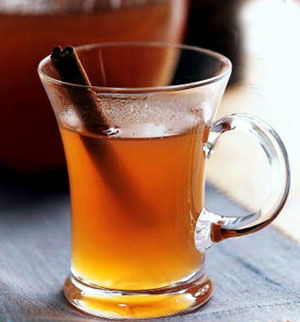
Spiced Mulled Cider
|
This warm and comforting drink is great on a cold day.
Combine lime zest and juice, lemon zest and juice, sugar, and salt in large liquid measuring cup; cover with plastic wrap and refrigerate until flavors meld, 24 hours. Toast spices in large saucepan over medium heat, shaking pan occasionally, until fragrant, 1 to 3 minutes. Add cider, orange zest, and sugar and bring to boil. Reduce heat to low and simmer for 30 minutes, using wide, shallow spoon to skim away foam that rises to surface. Pour cider through fine-mesh strainer lined with coffee filter and discard spices and orange zest. Serve. (Mulled cider can be refrigerated in airtight container for up to one week. Reheat before serving.) – Recipe courtesy of Cook Like James |
Apple Pomegranate Sparkling Sangria
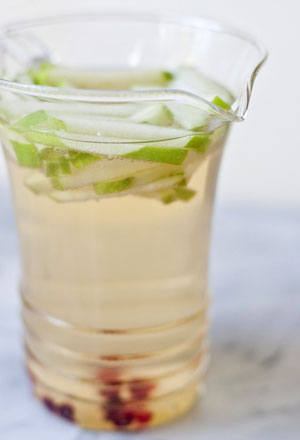 Every holiday party deserves a little cocktail. Don’t you agree? Using seasonal ingredients to create both savory and sweets is a given. Drinks should share in what the season has to offer and that is exactly why this cocktail will be what we will be toasting with this season.
Two years ago I made Moscow Mules and last year I whipped up Persimmon Mojitos using one of my most favorite seasonal fruit. This year I am all about the Honey Crisp Apple.
If you haven’t eaten one yet, you are truly missing out. It is the one apple, aside from a good Fuji, that I crave. Around 11 a.m. every day, my snack of choice is a honey crisp with a wedge of raw, white cheddar. So satisfying!
Whipping up a cocktail is an effortless task. I don’t drink all that much and when I do come up with something as simple as this I am reminded as to how much easier it is to mix up a drink, unlike a cake or a tart.
Which Wines Go Best With Soups & Stews?
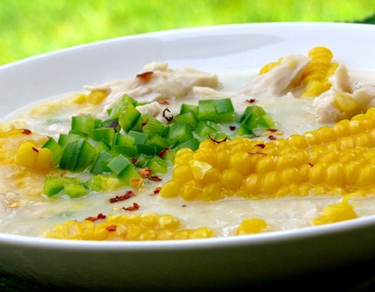 When we think of pairing wine with soup, we often think wine only complements thick, meaty stews or soups...and sometimes that is right on. However, when it comes to making the perfect pairing, it's really what's in the pot that determines the perfect wine match.
With earthy flavors, like spices, herbs and tangy tomatoes, you want a wine with good acidity. When it comes to sweeter veggies like onions, squash or carrots, you'll need a wine that is more rounded and lush with fruity flavors.
Clam Chowder: Not all wines are equal here. A luxuirious soup like clam chowder, has a briny taste of the sea and it begs for a citrusy zest of a wine like our Pinot Gris. This wine's lemon and lime accents easily cut through the silky, rich broth and starchy potatoes in the chowder. It's heaven. Some Rieslings might also work well here.
Chicken Soup:For a soup that blankets us in warmth, it begs for a wine that is as weighty as winter itself. A buttery, oaked Chardonnay works wonderfully with chicken and vegetables, while the hints of vanilla spice from the oak complements the herbs.
More Articles ...
Check out--
-
Turkey-Butternut Tortilla Soup with Zesty Lime Sour Cream
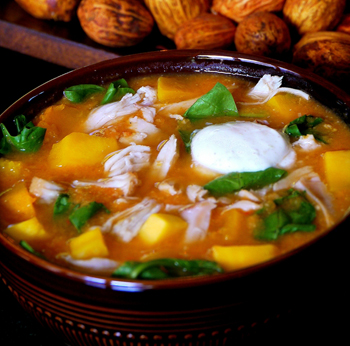
For the soup:
3 cups cooked turkey, shredded
1 butternut squash
1¼ cups onion
1 cup corn
4 garlic cloves
1 jalapeno
3 Tablespoons olive oil
3 corn tortillas
2 cups tomatoes
3 Tablespoons tomato paste
1 Tablespoon ground cumin
6 cups chicken broth
6 ounces spinach
Salt and pepper to tasteFor the sour cream:
½ cup sour cream
1 Tablespoon lime juice
Zest of one lime
¼ teaspoon ground cumin
Welcome to the new One for the Table ...
Our Home Page will be different each time you arrive.
We're sure you'll find something to pique your interest...