
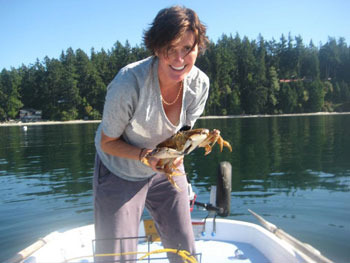
 When I am at my home on Orcas Island, Washington and away from the concrete jungle of Los Angeles, I morph from a well dressed city slicker to a somewhat cave-like hunter and forager.
At this time of year, I trample around the forests, looking in the ferns with my beady eyes for the first sign of fiddleheads, I watch the crocuses peep up through the ground as the blossom bursts on the apple trees; but most of my cavewoman thoughts are towards the ocean, the icy, clear ocean filled with great big fierce Dungeness crabs.
Catching crabs is my passion. This past winter, the season opened for a few weeks in December and I was out there in my little row boat, freezing rain pelting down, hardly able to find my boeys due to the rough water; my husband watching bewildered through binoculars, from our little cottage; and as I pulled up my traps to see my haul of crabs, I was happier than a child on Christmas morning.
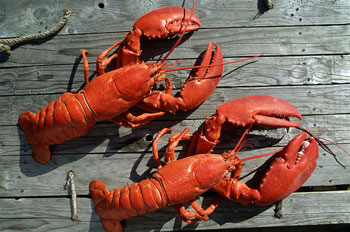 Last week, on Martha’s Vineyard, while eating lobster on the docks of
Menemsha, my 20 year old daughter asked, “Where do lobsters come from?”
She always stumps me! I’m still having trouble with chickens and eggs,
so I looked it up and what I found was utterly fascinating.
Last week, on Martha’s Vineyard, while eating lobster on the docks of
Menemsha, my 20 year old daughter asked, “Where do lobsters come from?”
She always stumps me! I’m still having trouble with chickens and eggs,
so I looked it up and what I found was utterly fascinating.
 I am half Norwegian and half Irish American. Both of my parents' families were, as you can imagine from completly different worlds.
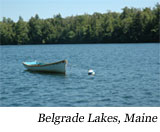 “The Lakes!” The children would shout from our rented Mini-Van, as we approached Waterville, Maine for our summer vacation. The first lake symbolized that we were almost at the end of our long day of traveling from Los Angeles. Every July, my husband and I traveled with our blended family of seven children in to the deepest country of the Belgrade Lakes, Maine. Unlike the coastal towns, the inland lakes do not attract the tourists in masses, mostly New Englanders, visiting camps that have been within their families for generations.