
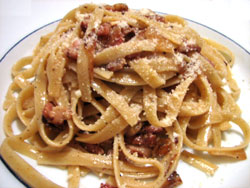
 I love the story of stone soup. I love it for all the wrong reasons. You know the story, right? The moral is that by sharing what one has, everyone eats well. But for me, I am like the greedy villagers, still amazed that soup can be made with a stone.
While not quite stone soup, you might think of this as "stone pasta". A dish of plain pasta it is made better with a bit of bacon, onion and a knob of brie. The resulting dish is kind of like Spaghetti Carbonara only faster and easier, and possibly even tastier. And I love Spaghetti Carbonara!
Brie has long been considered by many to be the most popular of all French cheeses. It comes from a province once called, "Brie" now called Seine-et-Marne which is not that far from Paris (and now more famous for being the site of a Disney Resort). Real brie is made from unpasteurized cow's milk but the version available in the US is made from pasteurized milk so the resulting cheese is milder and less ripe than true brie.
Cooking Techniques and Kitchen Gadgets
Cooking and Gadgets
Learning the Art of Charcuterie
 I spent last weekend at a workshop on Charcuterie: the craft of salting, curing and smoking pork under a hunter’s full moon with authors, Michael Ruhlman and Brian Polcyn in the precious, coastal Maine town of Dear Isle. My first time off in 7 months and they had one more opening. How lucky am I?
All 30 fellow students gathered for the workshop at 3 o’clock Friday afternoon under a sunny sky with a warm ocean breeze. Everyone milled around the beautifully restored post and beam barn meeting each other and patting the vocal goats in one of the stalls that begged for attention. Jumbo bales of hay dotted the corners of the barn as kittens slept in the afternoon sun, unconcerned that the barn was slowly filling with a crowd.
There was a long communal table set with plates, flatware and empty platters for later. A large commercial stove was set up outside the large barn door on the dirt driveway connected to a small propane tank that was jerry-rigged, all sitting next to the jumbo winter wood pile. Next to the makeshift butchering table laid out with Chef Polcyn’s knives was a large livestock watering trough filled with ice blocks covering Lucy, a very lovingly raised and killed pig-she was the other ‘rock star’ of the workshop.
The Herb Brush: A Great Summer BBQ Tool
 Any night this summer, you’ll find me hanging with friends, raising a frosty one in the backyard, while the kiddies run around and the guys flip steaks, burgers and chops. Is there anything better?
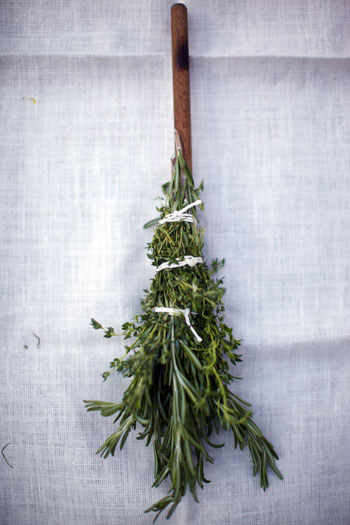
I’ll be using one of my favorite grilling tools, a do-it-yourself “herb brush” which I use to baste the meat while it cooks. Besides looking cool, it lets you slowly, steadily and subtly layer on the aromatic oils in those herbs, while keeping the meat moist. Using kitchen twine just tie a bunch of fresh herbs (any of your favorites will work: thyme, rosemary, sage, …) to the end of a wooden kitchen spoon. I like a really long spoon and it will make it easier to baste with.
And when you are done basting, you can chop up the herbs and add them to baked beans or sprinkle over grilled vegetables—you can’t do that with a regular basting brush! Herb brushes are great on beef, and on Fourth of July there's nothing I like more than an over 1-inch Rib Eye. Here's how you do it:
Top 10 Secrets for Grilling Success
"Every Grillmaster has a few tricks up their sleeves for ultimate grilling success, giving moist, juicy, flavorful results every time they light up the grill. Here are the Top 10 Secrets for Grilling Success that will make even a novice griller look like a pro."
1) Invest in a Meat Thermometer: Using a meat thermometer takes the guesswork out of grilling. By knowing exact internal temps, you can remove meat at just the right time for moist, juicy results. I recommend the Thermapen — it’s an instant-read digital thermometer that shows temps in less than five seconds, so you’re not spilling valuable heat from the grill.
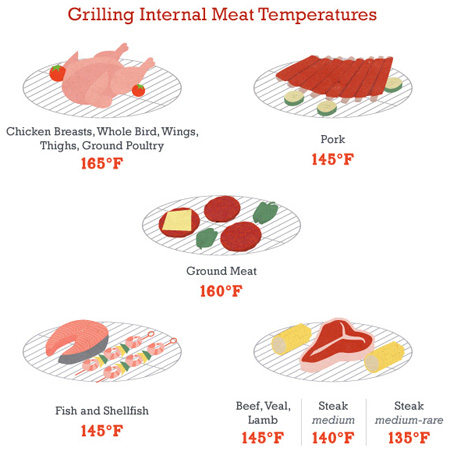
2) Know Minimum Internal Temperatures for Meat: These are the minimal internal temperatures for meat, according to the U.S. Department of Agriculture. Keep in mind that when you take your meat off the grill, it continues to cook, so it is OK to pull it off when it’s a few degrees under the listed temperature.
Homemade Ketchup
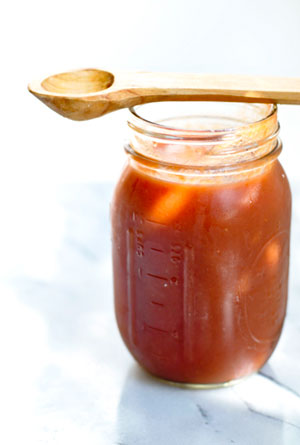 The supermaket shelves are lined with bbq sauces, ketchup, salad dressings, and marinades. Over the past couple of years, I have stopped purchasing almost everything and anything, such as the list above, that can easily be made with pantry ingredients. I have always made my own salad dressings, I keep jars of homemade barbeque sauce in the fridge, and making fresh salsa could not be easier. My freezer is filled to capacity with chicken stock, beef stock, vegetable stock, marinara sauce, bolognese, pesto, doughs of all kinds, and red enchilada sauce.
I have spent the last three months trying my hand at ketchup. The first few batches were very “vinegary”. Others were too spicy. The rest were too thick. I have lots of ketchup that I can not throw away. I have found ways to use up the not-so-perfect ketchup. My BBQ sauce calls for 4 1/2 cups, I slather my turkey loaf with ketchup before baking, and my homemade baked beans uses 28 ounces of ketchup. Needless to say, I have a lot of barbeque sauce on hand. Who wants some?
More Articles ...
Check out--
-
Labor Day BBQ Specials
 Bacon-Wrapped Shrimp
Cowboy BBQ Burger
Buttermilk Fried Chicken
Alan's Grilled Salmon
Barbecue Beer Ribs
Mango Shrimp KabobsEvelyn Hall’s Baked Beans
Chili Butter Corn on the Cob
Mac and Cheese
Mediterranean Orzo Salad
Old Fashioned Potato SaladTomato & Avocado Salad
Watermelon, Feta & Mint Salad
Lulu's Tastiest Coleslaw
Suzanne Goin's SuccotashThe Bootleg | Cuba Libre | Dark 'n' Stormy | Mai Tai | Margarita | Mojito | Sassy Sangria
Sea Breeze | Tequila Sunrise | Tequila Gimlet | Watermelon FallsAlmond Pear Pie | Apple Pie | The Best Brownies Ever | Blackberry Pecan Crisp
Maple Bacon Chocolate Chip Cookies | Crunchy Ice Cream Sandwiches
Grandma Hazel's Lemon Cake | Peach Cobbler | Plum & Toasted Almond Galette
S’mores Cookie Bars | Fresh Strawberry Pie | Whoopie Pies
-
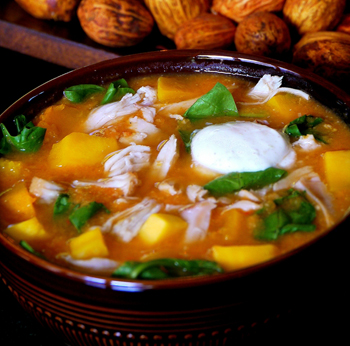
Turkey-Butternut Tortilla Soup with Zesty Lime Sour Cream
For the soup:
3 cups cooked turkey, shredded
1 butternut squash
1¼ cups onion
1 cup corn
4 garlic cloves
1 jalapeno
3 Tablespoons olive oil
3 corn tortillas
2 cups tomatoes
3 Tablespoons tomato paste
1 Tablespoon ground cumin
6 cups chicken broth
6 ounces spinach
Salt and pepper to tasteFor the sour cream:
½ cup sour cream
1 Tablespoon lime juice
Zest of one lime
¼ teaspoon ground cumin
Welcome to the new One for the Table ...
Our Home Page will be different each time you arrive.
We're sure you'll find something to pique your interest...