 While I wait (and wait) for our local asparagus, it occurs to me that everyone else is not waiting. The grocery stores are full of asparagus (from elsewhere, wherever that is) and it is hard to walk down the produce aisles without snatching up a bunch. I understand, really I do, and that is probably why my two blogs on asparagus from last year are getting hit up a lot these days. So okay, I can’t be my stubborn self and wait another month to offer up more asparagus recipes. Especially because there are about a gazillion different ways to cook asparagus—almost all of them pretty darn quick—so I can come back to this provocative vegetable again. Soon.
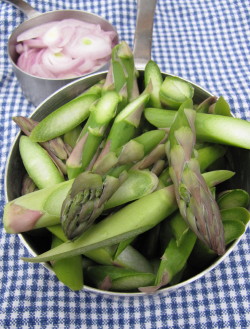
While I love quick-braising and sautéing asparagus, I think the method that may be the absolute speediest may offer up some of the best flavor, too. It’s stir-frying. Two to three minutes, and you’ve got a beguiling roasty-toasty flavor and a nice crisp-tender texture. A few keys here: Slice the asparagus thinly on the bias for the best browning; don’t use a lot of fat; keep the heat cranked up. (I love the bowl shape of my non-stick stir-fry pan, but you can substitute with a nonstick skillet—just stir more frequently.)
I like to include a bit of garlic, some sliced scallions or shallots (as in the recipe below), or a combo of ginger and garlic in an asparagus stir-fry—but not much more. I don’t make a finishing pan sauce for it, in order to let that pure flavor shine through. (I do, however, sometimes like a cool, creamy garnish for this dish—crème frâiche is lovely.)
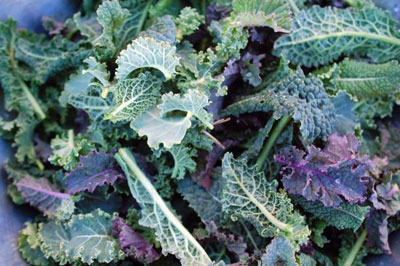 Let’s talk about spring greens, specifically baby kale. I am very excited that baby kale is finally making it into mainstream supermarkets. I’ve seen more of it just in the last couple months, since I first mentioned it in a
  Well, I am embarrassed to admit that I got overwhelmed in Whole Foods the other day. Here I am a Food Professional (whatever that is), and the sheer abundance of goodies in the store was just too much for me. Granted, it was a quick stop—I only had 10 minutes to troll the store, as I was on my way to a book signing at
 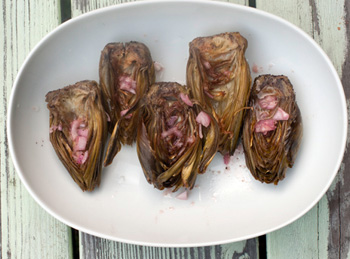 One of the wonderful aspects of living in Southern California is the weather. The weather affords us to be outdoors more than indoors, avoiding heavy boots and jackets, and perusing the local farmers market even on those rare days when there may be a light sprinkle in the air.
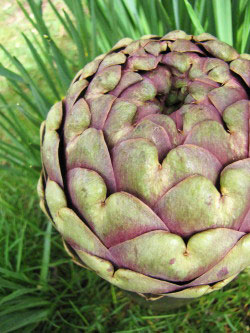
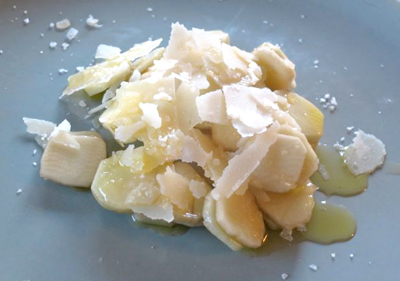 People say we don’t have seasons in LA. Oh but we do my friends, we do. For example, now is Artichoke Season, a time when (if you’re lucky) you can find a farmer harvesting huge heavy artichokes with a long stem still attached. The artichoke head that we eat is the bud stage of a giant gorgeous purple flower. As the artichoke ages the “leaves” of the bud open ultimately revealing the choke which turns deep lavender. For eating you want the bud pretty tightly closed. And look for heavy artichokes. Heaviness means freshness. When the artichoke is freshly cut it’s cells are full of water. As time goes by the water transpires and evaporates leaving the vegetable light and dry.