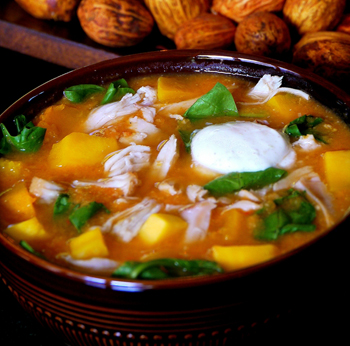
 "Hey, come over here, kid, learn something. You never know, you might have to cook for twenty guys someday. You see, you start out with a little bit of oil. Then you fry some garlic. Then you throw in some tomatoes, tomato paste, you fry it; ya make sure it doesn't stick. You get it to a boil; you shove in all your sausage and your meatballs; heh?... And a little bit o' wine. An' a little bit o' sugar, and that's my trick." - Clemenza teaching Michael to cook. The Godfather, Part I.
When Jeff and I were dating, we would on occasion deliver papers for his family’s Sunday morning paper route. I distinctly remember his mother’s detailed descriptions of whose paper went where: Mr. Lisi, the front door, Ms. Vitale, the side door, the Di Fusco’s, the front door if the screen was open but the back if it was locked. I also distinctly remember the smell that hit you when you walked up each of the little driveways early in the morning and opened the screen doors. Not coffee, not maple syrup, not bacon and eggs, but gravy.
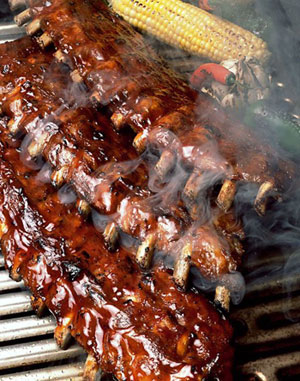
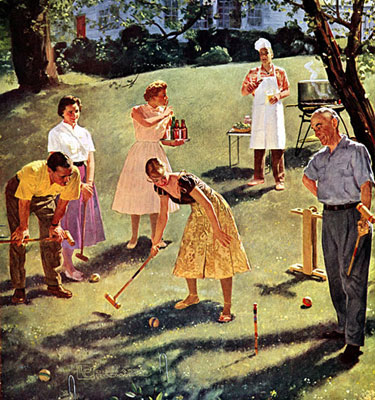
 I have an image of my father wearing a blue and white canvas pin-stripe apron over his clothes that my mother gave him (with good reason), standing over the barbecue in our backyard alternately spraying charcoal fluid (with big effect) on the briquettes and a few moments later spraying, using his thumb as a spray cap, a large bottle of Canada Dry Soda Water filled (and refilled) with water from the hose onto the resulting flames from the barbecue that were threatening to ruin his perfect barbecued ribs. They were perfect which is sort of surprising since my father couldn’t really cook at all. Scrambled eggs and burnt bacon is about all I remember from his repertoire except for the night he exploded a can of baked beans since he’d decided it was okay to heat them in the can (unopened) which he’d placed in a large pot of boiling water and, I think, forgotten about them. Tip: don’t try that at home.
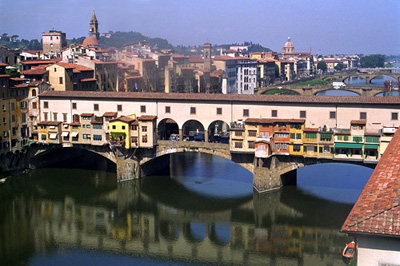 From the time I was in nursery school until I graduated from high school, I never spent a summer in my home state of Michigan. Most summers we went to Maine, but for three summers, we headed not to the rocky, Atlantic coast, but across that ocean to Europe. The middle summer when I was fifteen, we explored England, Italy and France deeply and passionately. My mother, possibly the best trip planner ever to draw breath, spent nearly a year before the trip selecting the perfect bed & breakfasts, auberges and pensiones for us.
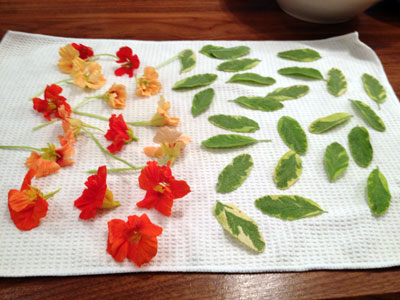 Alessandra, a neighbor of ours in Umbria, is a wonderful cook.
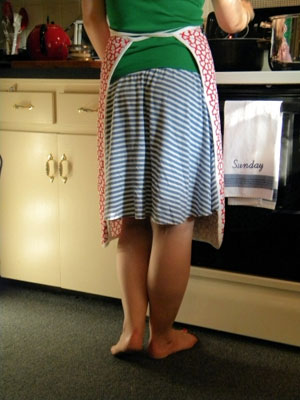 My sister and I were raised in a house with two working parents. When we were younger, our father worked nights while our mother worked days. This schedule left our dad on dinner duty. Luckily, having been raised by a working mother himself, our father already had cooking skills in place. My mother, who didn’t know the difference between olive oil and Karo syrup, wrote a note to my dad’s mom thanking her for teaching him how to cook. My mother claims it was Gloria Steinem’s influence that led her to delegate my dad to kitchen duty, but really it was because he was the only one who knew how to “wear the apron” in the house.