
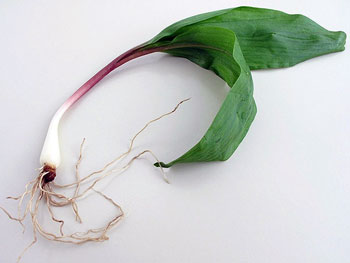
 Every year with the arrival of spring comes the short-lived season of ramps. From about April to May ramps are available in farmers' markets in the Northeast. Here people go crazy over ramps. Sometimes I wonder why they're loved so much. Last year I cooked and pickled ramps for the first time and grew very fond of them. Ramps are unique in that they're harvested from the wild. If you know where to find them or know of a forager who can find them for you, then you're very lucky to get them for free. But the rest of us have to buy them at the market.
This past Saturday I visited the Union Square Greenmarket and was excited to find ramps still available at one of the market's best stands. Mountain Sweet Berry Farm is know for their stellar ramps. You can't miss them, they have a very large ideas board on display that includes recipes for ramps from local chefs. So if you're ever in the city this month, stop by the market and look for the long line of customers and the board of famous scribbled recipes. Not only will you grab a bunch of these unusual edibles, but you might pick up a few new cooking ideas. Read more about ramps and see the board in this great article at Leite's Culinaria.
Spring
Spring
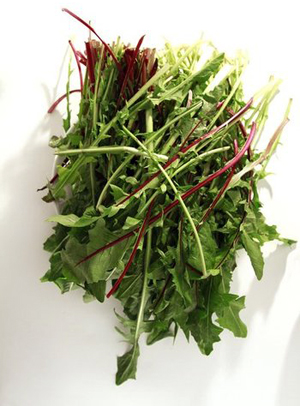
Dandelions for dinner? A weed by any other name...
 From the LA Times
"But they're weeds."
My much better half is not, shall we say, "adventurous" when it comes to greens: A "real" salad is built around a wedge of iceberg or chopped romaine. Stewed collards are fine for New Year's Eve, and sautéed spinach can make an occasional appearance at the dinner table. But that's where the love ends. Forget arugula and radicchio, and don't even think about frisee.
So when I pitched dandelion greens for dinner the other night, well, you can probably understand the breathless shock.
Dandelions are an assertive green, just ask any gardener who's had to battle them on the front lawn or in cracks on the driveway. Unwanted, any greens are "weeds."
But have you ever bitten into a dandelion leaf? The flavor is tangy, even borderline bitter, with a definite texture. It's an assertiveness that can work wonders in the kitchen, provided you know how to handle it and pair the greens with complementary flavors.
You Can Make a Lot of Salsa with a Case of Mangoes
 A week without a trip to the farmers' market is like a week without the sun: it makes me grumpy. I can’t remember the last time I bought produce in a regular grocery store. Sure, I go to the supermarket for eggs, milk, and cereal, but fruits and vegetables come from the farmers. So, what I did other day, shocked me. I tell myself it a was just a transgression.
I was at Costco stocking up on bottled water, protein powder, and toilet paper (why two people need 36 rolls of Northern toilet tissue, I’ll never know). On my way to the protein powder, I passed pineapples, tall, fragrant, ripe pineapples each topped with a crown fit for a king. They had no brown spots, no fuzzy fur on the bottoms—they were perfect. Better yet, they were only $2.99 each. I couldn’t believe it! I put two in my carriage and buried them under the toilet paper.
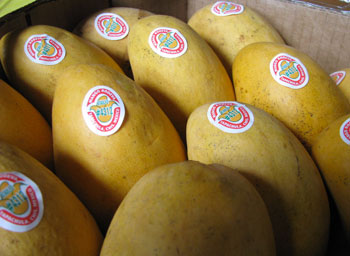
Not 20 feet later on my way to the water, I passed a mountain of mangoes, whose green and yellow skins were taut and unblemished. Having just paid $1.75 each for some (which weren’t even good), I stopped to check the price -- $8 for a whole case! I debated whether or not to buy them. What would we do with a whole case of mangoes? Would they be sweet? What if they all ripened at the same time?
Move Over Banana Bread, Mango Bread's In Town
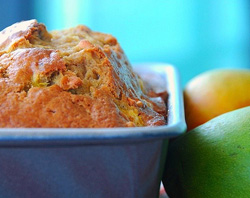 This may just be the perfect breakfast bread.
It's a tweaked version of Dorie Greenspan's (Baking: From My Home to Yours) dense, fruit studded mango bread. It's so good that it may even surpass my beloved Banana Bread with Toasted Coconut and Almonds. And that's saying something.
I first made it last winter when we had relatives visiting. It was polished off in two days, and there were only four of us. I have made it several times since, and it has consistently received stellar reviews. It's on my "go-to list" of recipes and will surely be on yours too once you try it.
What makes this mango bread so delicious? Creamy mango, chewy raisins, aromatic ginger, and crunchy cashews to start. It's a satisfyingly moist, highly textured, aromatic bread with just the right sweetness. The only hard part is stirring the batter which is stunningly thick. You think to yourself, this will never cook, but it does, perfectly, every time.
Radish Greens Pesto
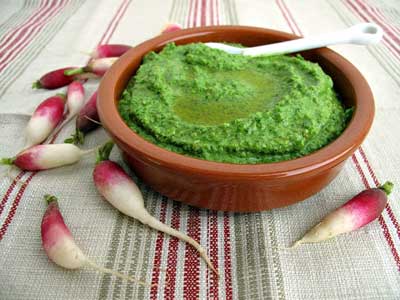 Pesto isn't just for basil, though traditionally that's what pesto is made of. The word pesto itself means "pounded" in Italian. Famous in Genoa, the pesto of basil, pine nuts, Parmesan and olive oil is a delicious sauce on pasta. But many herbs and/or greens can take the place of basil to create a flavorful pesto. In the past I've made it with parsley, cilantro and even ramp greens. This time I've made a pesto from radish greens.
It may sound crazy but I love using up every last remnant of vegetables. It's not unlike saving vegetables scraps for stock. I mean why throw anything away when it's good for flavor? Radish leaves are not only on the radish for show, they're very much edible as a pesto or even sautéed and tossed with pasta. They offer up a unique fresh and peppery flavor that enlivens the palate.
The next time you buy a bunch of radishes, save the greens and use them—you'll be pleasantly surprised. Try the pesto spread on sandwiches, mixed into pasta, or used as a sauce on pizza in place of tomato sauce.
More Articles ...
Check out--
-
Turkey-Butternut Tortilla Soup with Zesty Lime Sour Cream
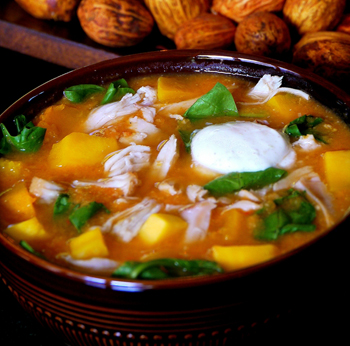
For the soup:
3 cups cooked turkey, shredded
1 butternut squash
1¼ cups onion
1 cup corn
4 garlic cloves
1 jalapeno
3 Tablespoons olive oil
3 corn tortillas
2 cups tomatoes
3 Tablespoons tomato paste
1 Tablespoon ground cumin
6 cups chicken broth
6 ounces spinach
Salt and pepper to tasteFor the sour cream:
½ cup sour cream
1 Tablespoon lime juice
Zest of one lime
¼ teaspoon ground cumin
Welcome to the new One for the Table ...
Our Home Page will be different each time you arrive.
We're sure you'll find something to pique your interest...