
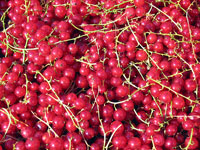
 Red currants, the beautiful ruby red berries pictured above, make the perfect tart jelly. Growing in grape-like clusters on small bushes, the fruit has become a rarity in the United States. Mistakenly thought to promote a tree disease, currant bushes across the country were systematically uprooted in the early 1900s, and production was prohibited for many years.
Currants are high in vitamin C and taste tart but pleasant when eaten. Commonly red and black currants are made into jellies. In fact black currant jelly or jam is very popular in England. I remember that while studying abroad in London, no matter how hard I looked, I could not find Concord grape jelly for my peanut butter sandwiches, so black currant jelly became my unusual but greatly liked substitute. Red currant jelly is practically the same color as black currant jelly, so after making this you really won’t tell the difference.
Every year we pick every last red currant berry off the small bushes in my parents’ yard and make jelly. It has been a summer tradition since I can remember. I really appreciate that we have the berries available at our fingertips.
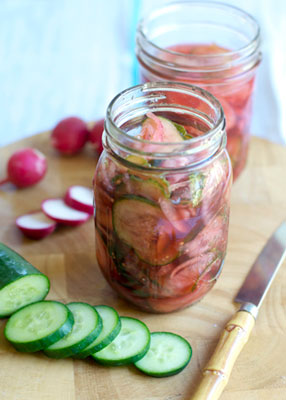 Isaac and I have established that a burger isn’t a burger without pickles. We both agreed that our pulled pork sandwiches (last night's dinner) was no exception to the pickle rule. I love pretty much anything pickled. I have been a pickle lover ever since I could remember.
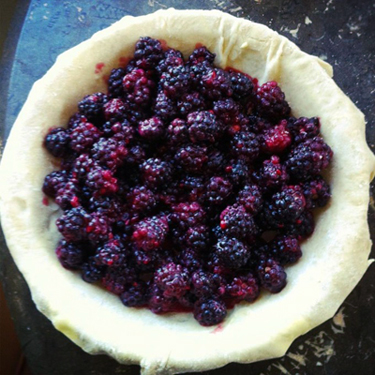 Berries are fragile, which is why we love them so much off the bush or in a bowl But there are a couple of things to keep in mind once you decide to cook them, like in a pie.
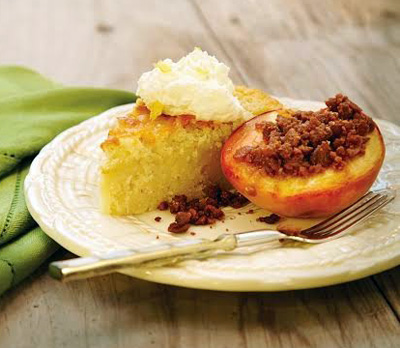 Almond and peach flavors are totally apropos for one another – probably because they’re cousins! Peaches are in the almond family. Just take a gander at a peach pit’s inner pit or the blossoms even – you’ll see the family connection for sure! I won’t bore you with the horticultural nomenclature, Latin naming, bark similarities and inner cambium layers of their trunks: just trust me – they’re related!
 Forgive me, Whole Foods, for I have sinned….