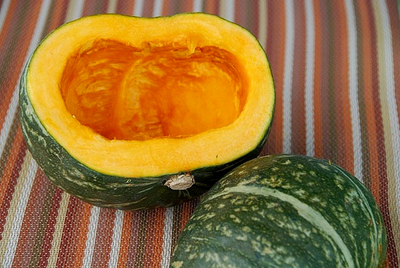
 I am all about kabocha squash.
Well, that’s not entirely true. I do have other obsessions, but today it’s squash.
I bought some of the stuff (aka Japanese pumpkin) at the Farmers’ Market in Santa Monica last weekend, from a vendor who had very nicely already pre-seeded, pre-peeled and pre-cut it. (Actually what I am all about is people who pre-do things like this since if I had to do them myself I would never eat the food that requires such tasks.)
Anyway, all I did was steam the squash till it was tender, then whip it up in the food processor with a little salt and pepper and a tablespoon of coconut milk and it was dreamy.
Kiss your butternut squash goodbye, my friends. This one is much smoother and sweeter. Needs no added oomph, like it’s demanding cousin butternut does.
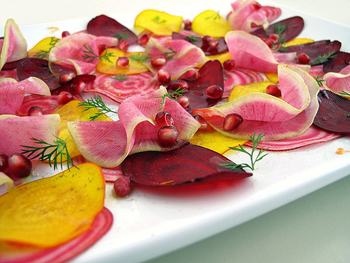 Eat your beets! We've all heard that from our moms quite often as kids. Unfortunately it was more often canned beets that we were persuaded to eat. As a curious eater, I've come to appreciate beets in many different preparations. I especially love them roasted in salads. But have you ever thought of eating them raw? Sliced very thinly, beets and other root vegetables, make great salads. Yes, it's possible to slice them thin with a knife, but a mandoline does the job better than anything else to get paper-thin shavings.
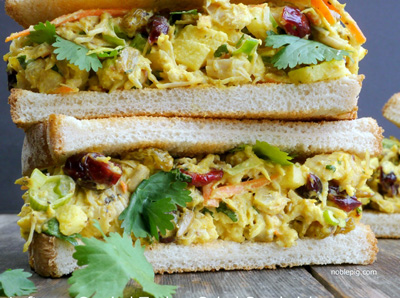 I’m calling it…the last of the Thanksgiving leftovers that is. This was truly the end of my turkey…those last two cups of shredded meat. It is December, time to wrap up this turkey thing and move on to the next holiday. However, I do know lots of you also make a gobbler for Christmas, so this recipe might come in handy at the end of the month. You’re welcome:).
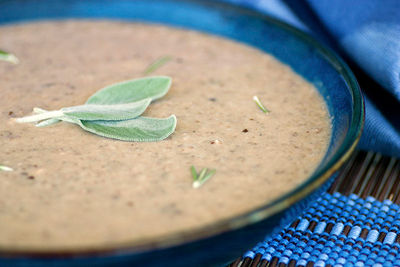 Mushroom soup should be like a good friend -- there for you when you need it, full of understanding and comfort, and spicy enough to make you laugh. Consider this Creamy Mushroom Chestnut Soup a best friend.
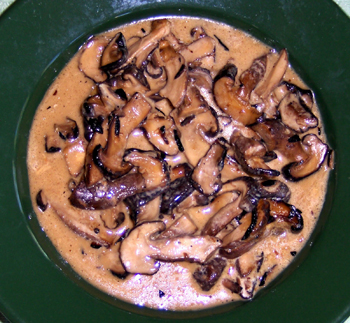 In general, shiitakes come in two forms: the slender stemmed variety and the ones which are fatter, with thicker stems and caps. Mitsuwa and SF Supermarket sell the fatter variety, which have a meater flavor.