
 It has recently come to our attention that in 90 days my husband may, or may not have a job. As the House Writer, I began immediately to work on resumés, cover letters, and all manner of beguiling a lifetime of hard and varied work into an irresistible nugget of information. No spinning or glossing is necessary in this case; the man has worked hard from the time he was driving a tractor illegally through the fields of the family farm. The work, the hard, complicated part of the thing is distilling the best of him using “action verbs” (as opposed to those other, non-action verbs) and using terms and jargon expected by the business world.
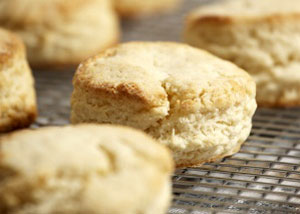
As I write about his work, and think again about the many things he knows, I think about how very odd, incomplete and schizophrenic my own resumé would appear at this time in my life. As of 7:30 or so last night, I might have said something like “well, I gave up law to be a cook, and I’m not trained professionally but I’m really good at it.” Having come directly from putting 25 pounds of flank steak to bed in sealed bags of fragrant marinade, knowing that I would get up this morning and make 100 impossibly fluffy biscuits for strawberry shortcake, I was feeling pretty cocky.

 We thought it would be really fun to do a summer reading piece and asked some of our contributors what they’ve read this summer and what they recommend.
 ). It’s an extraordinary, textured look at an American family, multi-generations of women and how they influenced their children and generations to come. Written in pitch-perfect prose, it’s just great!
 by Willliam Makepeace Thackery but don’t take this very seriously because I read “Vanity Fair” every summer and never manage to get through it... Except that Becky Sharp is one of the great characters ever written – it always loses me (or I lose the book) somewhere along the way... I know my friends at the
 I’m also riveted by Stuart Firestein’s new book
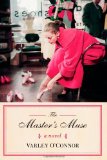

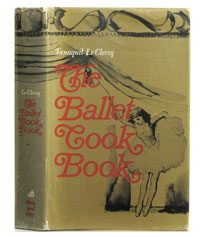 The rhythm of everyday life enters in: George chops tomatoes at their country house in Weston, and roasted chicken and dessert orange jelly are served to guests. Tanny, in the novel, mentions the kitchen as “the site of continual commotion…it looked forlorn to me tidy.”In The Ballet Cookbook, published in 1966, she collected the recipes of almost every famous dancer or choreographer of the time, including Jerry Robbins, Suzanne Farrell, Margot Fonteyn, and Rudy Nureyev, whose winter borscht is one of the crowd-pleasers. The cookbook has a cult following and, a la Julie and Julia, “Dinner with Mr. B.” events and the like have sprung up, with participants fording the shrimp bisque, blinis, banana sweets, and fish dinners that melted off the frames of the supremely lithe. The Master’s Muse comforts the reader with the assurance that a love of life can fortify a love affair that refuses to perish.

 My favorite book this summer is Maria Semple's
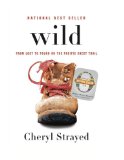
 The book that stole my heart and soul this summer was
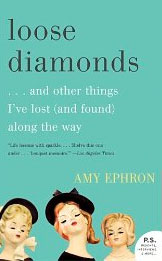
 (Amy's too shy to mention this but the paperback version of her latest book
 by Patti Smith. Loved. - Christina Wayne
 which is stunning. Now reading,
 , a real eye opener. And finished
 , on which I am ambivalent. - Linda Deutsch
 , a first novel by G. Willow Willows. Really interesting mix of modern Cairo and mystical jinns. I couldn't put it down. - Allison Thomas
 by Marilynne Robinson. I wept at the end just for extraordinary ordinariness of it all. - Pam Felcher
 - short stories by Peter Stamm - an internationally-acclaimed Swiss author - stories of people who are lonely and unhappy in their everyday lives (characters with whom we can identify). - Christina Zawadiwsky
 and both other Gillian Flynn books -
 and
 . - Kate Guinzburg
 by Coburn Hawk. And yes, Maria Semple's Where'd You Go Bernadette is next on my list. - Roni Keller
 I ate my share of lobsters while spending summers in Rhode Island. My family still talks about the 10-pounder we bought from a shop in Galilee. We spent an hour scouring the neighborhood looking for someone who owned a pot big enough to cook it. Lobster is still one of my favorite foods of summer — that's when it is the cheapest, when they move closer to shore and the fishing conditions are better.
 There are so many things wrong with Meg Whitman’s story that it’s difficult to know where to start. Meg Whitman was paying Nicky Diaz Santillan, her housekeeper, $23.00 an hour for 15 hours a week. Who
pays their housekeeper $23.00 an hour. Answer (and I’ve researched
this): Nobody. But wait, Nicky was, also her nanny. Assuming it was
Monday to Friday, who has a nanny three hours a day?!! Answer: Nobody.
Add into that, in addition to being a housekeeper/nanny, (i.e. domestic
hyphenate), it was, also, part of Nicky’s job to sort the mail which
clearly implies, she showed up, at least, five days a week.
 The weeks of soaking rain we had recently in LA were wonderful for
people’s gardens, with the depressing drawback of the continued,
surreal-seeming announcements, on radio and in the newspapers, that the
rain was having no effect whatsoever on the drought.